
Japanese Auction Grades Explained: How to Read a Sheet Before You Bid
By Galle Enterprises Import Desk · 11 July 2026 · 9 min read

Almost every used car imported into Sri Lanka comes through a Japanese auction house, and every one of them arrives with an auction sheet. Learning to read that single page is the difference between a clean import and an expensive repair bill discovered at the port.
The overall grade scale
Grades run from 6 (essentially new) down to 1, with letter grades for special cases. For Sri Lankan imports, grade 4 and above is the safe zone: original paint on most panels, no structural repair, and modest mileage.
- Grade 5-6 — near new, minimal wear, usually low mileage.
- Grade 4.5 — excellent, very light cosmetic marks.
- Grade 4 — good condition, minor scratches or dents; the volume sweet spot.
- Grade 3.5 — noticeable cosmetic issues or higher mileage; inspect closely.
- Grade 3 and below — significant wear or repairs; only for buyers who plan to refurbish.
- Grade R / RA — accident repair history. R means substantial structural repair; RA means light repair.
Interior grades matter more than buyers think
The letter grade beside the number (A to D) rates the interior. Interior A is close to spotless; C and D usually mean smoking odour, stained fabric or damaged trim. Trim parts are slow and expensive to source locally, so an interior C on an otherwise clean grade 4 car can still be a poor buy.
Reading the panel map
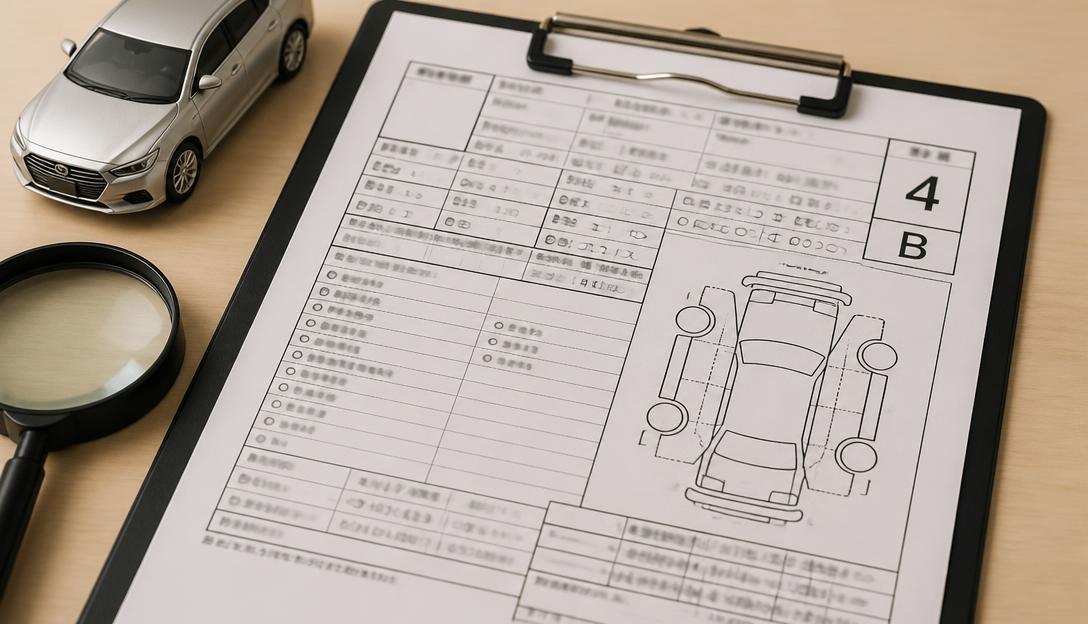
The diagram on the right of the sheet marks each panel with a code: A for scratch, U for dent, W for repaired, X for panel needing replacement, XX for already replaced. A number beside the letter indicates severity from 1 to 3.
One or two A1 marks are normal on any used car. Multiple W or XX marks clustered on one side suggest an unreported impact, regardless of the headline grade.
Red flags specific to Sri Lankan imports
Watch for odometer discrepancy notes, flood or salt-corrosion indications on cars from coastal prefectures, and hybrids with no battery health note. Also check that the shaken (Japanese roadworthiness) expiry is recent — a long-expired shaken often means the car sat unused for months.
Frequently asked questions
What auction grade should I buy for Sri Lanka?
Grade 4 with interior B or better is the best balance of price and condition for most buyers. Grade 4.5 and above is worth the premium if you plan to keep the car long term.
Are grade R cars safe to import?
Some are — RA cars with light, well-documented repair can be excellent value. Full R grade with structural repair is best avoided unless you have an independent inspection report.
Can the auction sheet be faked?
Sheets are issued by the auction house and can be verified against the auction reference number. Always ask your importer for the original sheet and the verification, not a photograph alone.
Get an exact landed cost for your vehicle
Use the Galle Enterprises valuation engine for a line-by-line duty and landed cost estimate in LKR.
Open the valuation calculator